
menu
Reconnect?
For an independent grocer, specialty food shop, restaurant, or neighbourhood retailer, sourcing products should be straightforward: find what you need, add it to an order, submit it, and get back to serving customers.
In practice, wholesale purchasing often feels very different. Each supplier may have a separate portal, catalog, login, order format, invoice process, and delivery schedule. A routine purchasing session can quickly turn into a series of browser tabs, spreadsheets, emails, and follow-up calls.
This is portal fatigue: and it is a sign that B2B commerce needs to work more like modern consumer e-commerce.
Imagine a retailer preparing a weekly order. They need beverages from a local brewery, sauces from a specialty producer, snacks from a distributor, and refrigerated products from another supplier.
Instead of one purchasing workflow, they may need to:
The work is repetitive, but the consequences are significant. A product may appear available in one portal while being out of stock in reality. An order may be entered twice. A delivery change may remain buried in an email thread. The retailer’s purchasing history becomes fragmented across systems, making it harder to understand what is selling and what should be reordered.
This is not simply an inconvenience. It creates extra administrative work at the exact moment independent businesses need to protect their time and margins.
A siloed B2B commerce platform can be useful for one supplier. It may provide an online catalog, receive orders, and support that company’s internal workflow.
The limitation is that the platform usually serves one company’s side of the transaction. The retailer still has to repeat the same process with every other supplier.
Siloed tools often lead to:
The issue is not that each supplier has a digital storefront. The issue is that those storefronts do not necessarily connect the commercial workflow behind them.
A true B2B marketplace for retailers gives buyers one place to discover products and manage purchasing across participating suppliers.
The retailer can:
One checkout does not mean every supplier has the same products, terms, or fulfillment process. It means the buyer should not have to rebuild the purchasing experience every time they switch suppliers.
Behind the scenes, the order can be organized for the appropriate producer, distributor, or fulfillment partner. For the retailer, the experience remains clear and centralized.
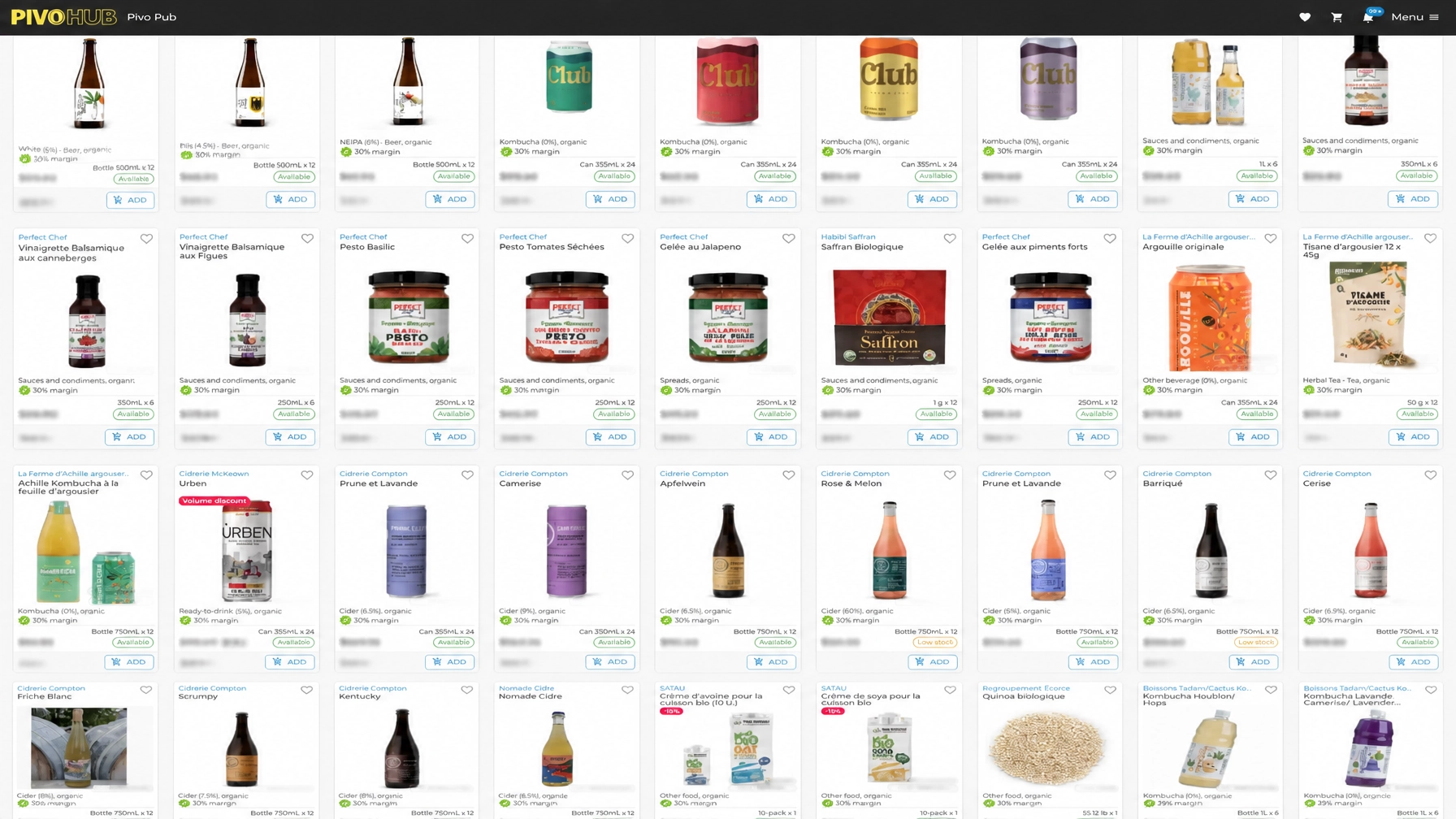
The difference can be summarized simply:
| Siloed B2B platform | Connected PivoHub ecosystem |
|---|---|
| Serves one company’s storefront | Connects producers, distributors, brokers, and retailers |
| Catalog is managed in isolation | Relevant catalog information is shared across the network |
| Inventory updates stay within one system | Availability can be synchronized across participating workflows |
| Buyer manages separate order histories | Buyer gets a more unified view of purchasing |
| Follow-up happens through disconnected channels | Order, fulfillment, logistics, and communication stay connected |
| Data is often re-entered between systems | Transactions can update the appropriate participants simultaneously |
A connected ecosystem does more than aggregate storefronts. It connects the operational information that makes those storefronts useful.
When a retailer places an order for craft beverages, specialty sauces, and packaged food, the relevant suppliers should receive the right order details. Inventory should reflect the transaction. Distributors and logistics teams should have the information they need. Accounting workflows should not depend on someone manually copying every line into another system.
That is the foundation of modern wholesale order management.
PivoHub is a connected B2B marketplace and ecosystem built for the food and beverage supply chain.
Retailers can use PivoHub to:
PivoHub is free for retailers, giving independent buyers a simpler way to source products without adding another costly system to their operations. Retailers can start ordering through PivoHub or learn more on the PivoHub buyers page.
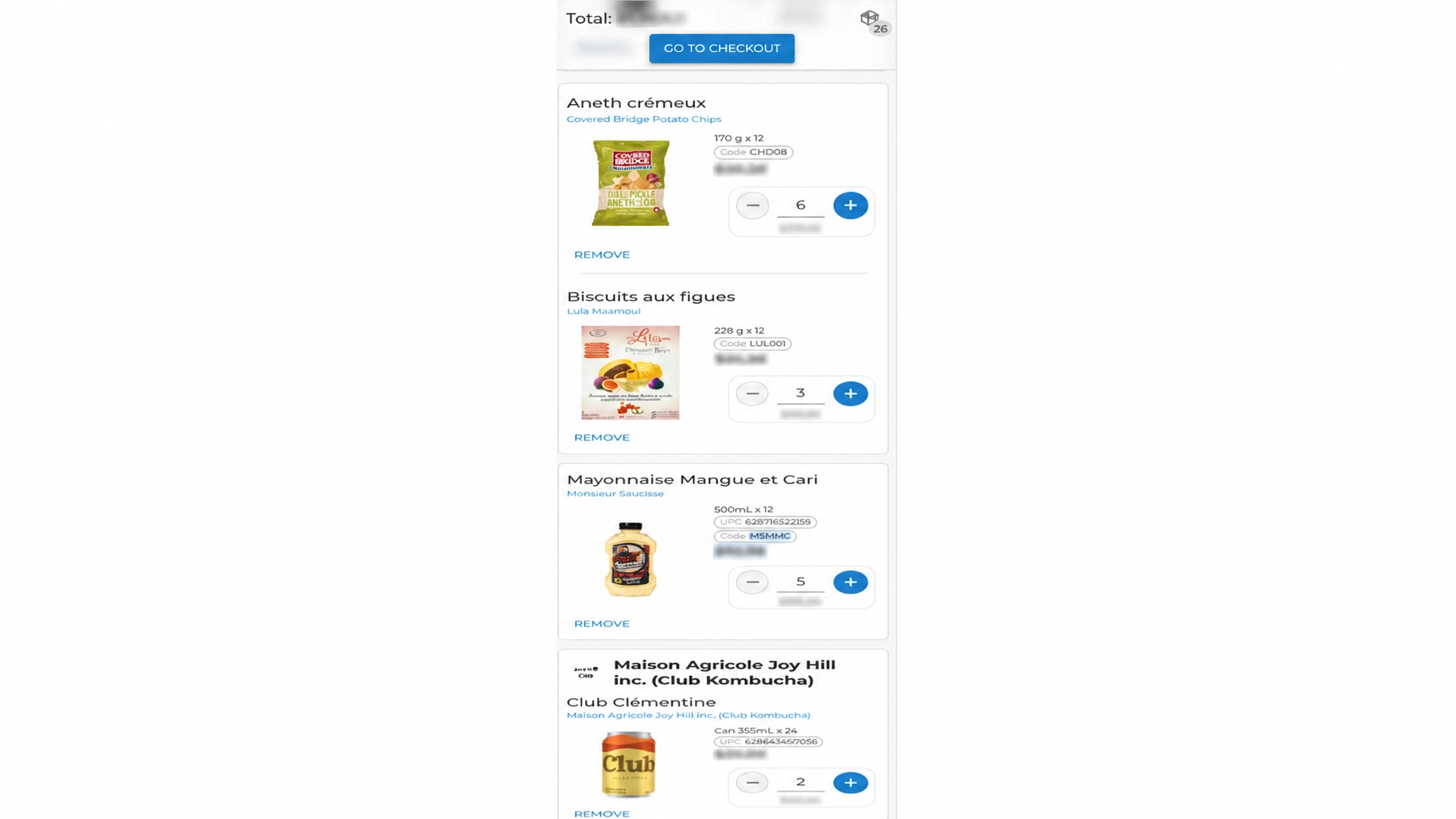
The ecosystem also benefits the businesses supplying the products.
For producers, manufacturers, and distributors, PivoHub provides:
A producer can manage product information and sales rules while making approved products available to the right buyers. A distributor can coordinate orders, inventory, routes, and invoicing in the same environment. A broker can work with multiple brands while keeping product information synchronized.
PivoHub’s seller tools and logistics features are designed to connect these workflows rather than leave each participant working from a separate version of the truth.
The value of one checkout extends beyond the buyer’s screen.
A consolidated order can help connect:
PivoHub supports connections with tools such as QuickBooks, Acomba, Lightspeed, and other accounting, ERP, EDI, and POS systems through its integrations.
That is the difference between a digital storefront and a B2B sales management software ecosystem: the transaction does not stop when the buyer clicks “submit.” It continues through the workflows that help products get sold, prepared, delivered, invoiced, and replenished.
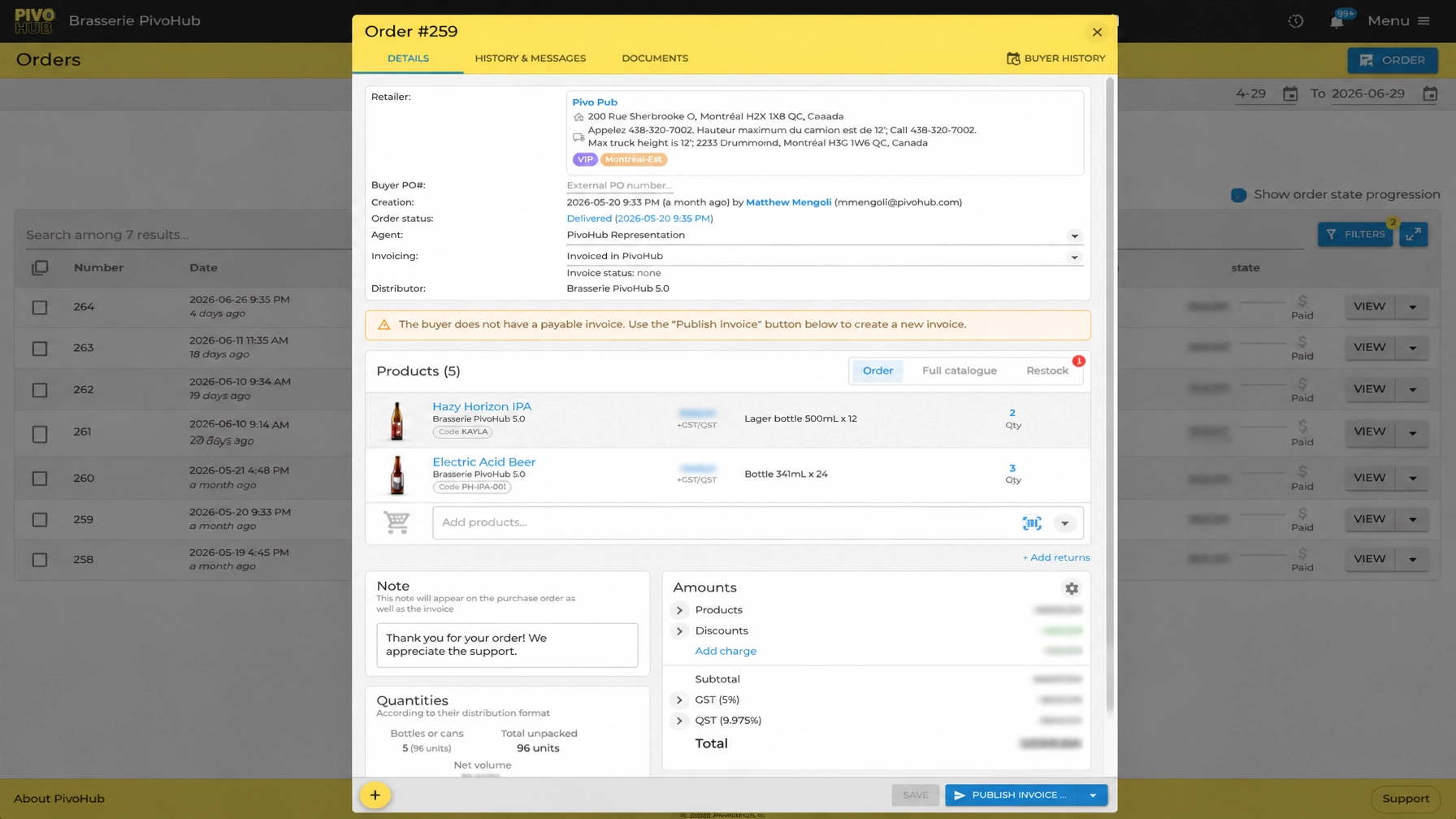
Independent retailers should not have to choose between local products and efficient operations. They should be able to discover excellent products from local producers while managing purchasing in one practical workflow.
A modern Wholesale eCommerce platform should make it easier to:
PivoHub brings these capabilities together in one connected network. It helps retailers spend less time switching portals and more time managing their shelves, menus, customers, and businesses.
The future of wholesale commerce is not another isolated storefront. It is a shared ecosystem where every participant has the information they need, when they need it: and where one transaction moves the whole supply chain forward.


