
menu
Reconnect?
A modern B2B commerce platform can make it easier for one company to receive online orders. But that does not necessarily connect the businesses involved in the transaction.
The producer may still manage catalogs in one system. The distributor may receive a monthly spreadsheet. The broker may send sales reports by email. The retailer may call to confirm availability. Logistics may use another tool, while accounting waits for someone to re-enter the order.
Adding more integrations can move information between these systems, but it does not always remove the underlying separation.
That is the difference between a siloed B2B commerce platform and PivoHub’s connected ecosystem. The first is primarily a commerce tool for one organization. The second is a multiplayer business network designed to connect producers, distributors, brokers, retailers, logistics and back-office teams around the same information.
The question is not: Which platform has more integrations?
The better question is: Does every participant work from the same operational reality?
A siloed platform may give a seller an online ordering page, but the wider sales process remains fragmented. Information is transferred manually or through limited, delayed connections.
That creates familiar problems:
More integrations can reduce some of this friction. However, each additional connection can also create another point to maintain, reconcile and troubleshoot.
A connected ecosystem starts from a different principle: the transaction should update the network, not just one company’s storefront.
Visibility is often discussed as an internal analytics benefit. Of course, a sales dashboard is useful. But for producers and brands, the most valuable form of visibility is often external:
Can the right buyers discover you?
A siloed e-commerce platform usually serves customers who already know the seller. It may support online ordering, but it does not necessarily help a producer become visible to thousands of retail stores, restaurants and specialty shops.
PivoHub combines a B2B marketplace with seller catalogs and buyer discovery. As of 2026, the PivoHub network includes:
For buyers, access to the marketplace is free. They can discover products from multiple suppliers, build a multi-supplier cart and place orders in a few clicks.
For sellers, this changes the role of digital commerce. The platform is not only a place to process existing demand. It can also become a channel for new market reach, helping products become discoverable by buyers who may not yet have a relationship with the brand.
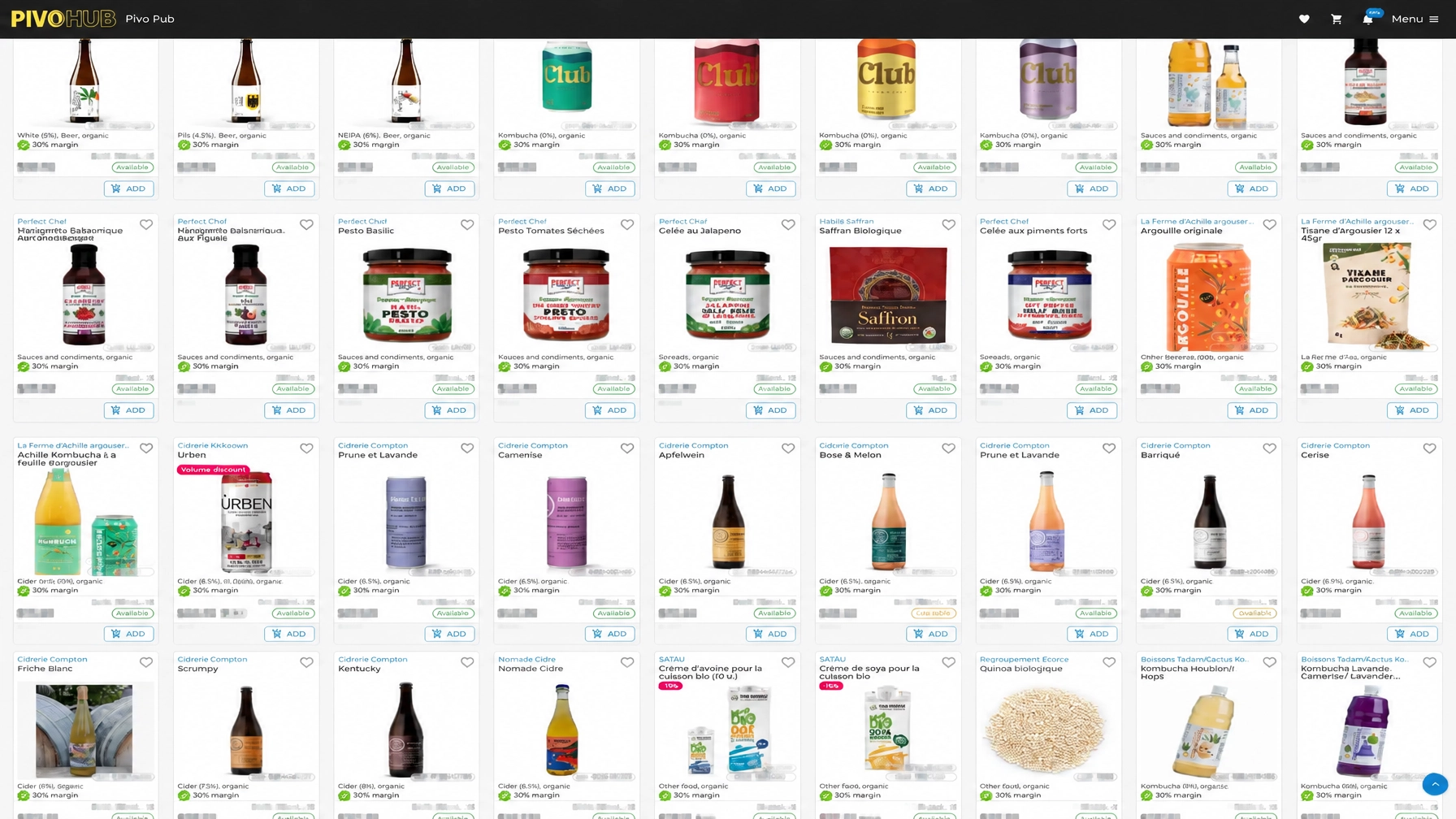
Sellers can also launch a white-labelled e-commerce storefront using their own brand and colours. This gives distributors and producers a branded digital ordering experience without creating a separate catalog, inventory database and order workflow from scratch.
The important distinction is that discovery, ordering and availability are connected. A buyer is not simply browsing a static website. They are interacting with a network where supplier information, products and purchasing relationships can support the next transaction.
The B2B sales process rarely ends when a buyer clicks “order.” It includes prospecting, catalog management, pricing, order taking, fulfillment, delivery, invoicing, commissions and follow-up.
In a siloed setup, each stage may belong to a different tool or team:
When these groups work from separate versions of the truth, small changes create large delays. A quantity adjustment may not reach logistics. A product substitution may not update the invoice. A delivery exception may remain in a driver’s notes instead of appearing in the order history.
PivoHub connects these stages through one operating environment. A transaction can move from order taking to inventory, fulfillment, delivery, invoicing and payment while keeping the relevant participants informed.
The order history and messaging timeline gives teams a shared record of what happened: order changes, delivery updates, documents, payment status and conversations. Instead of searching through email threads, teams can follow the transaction itself.
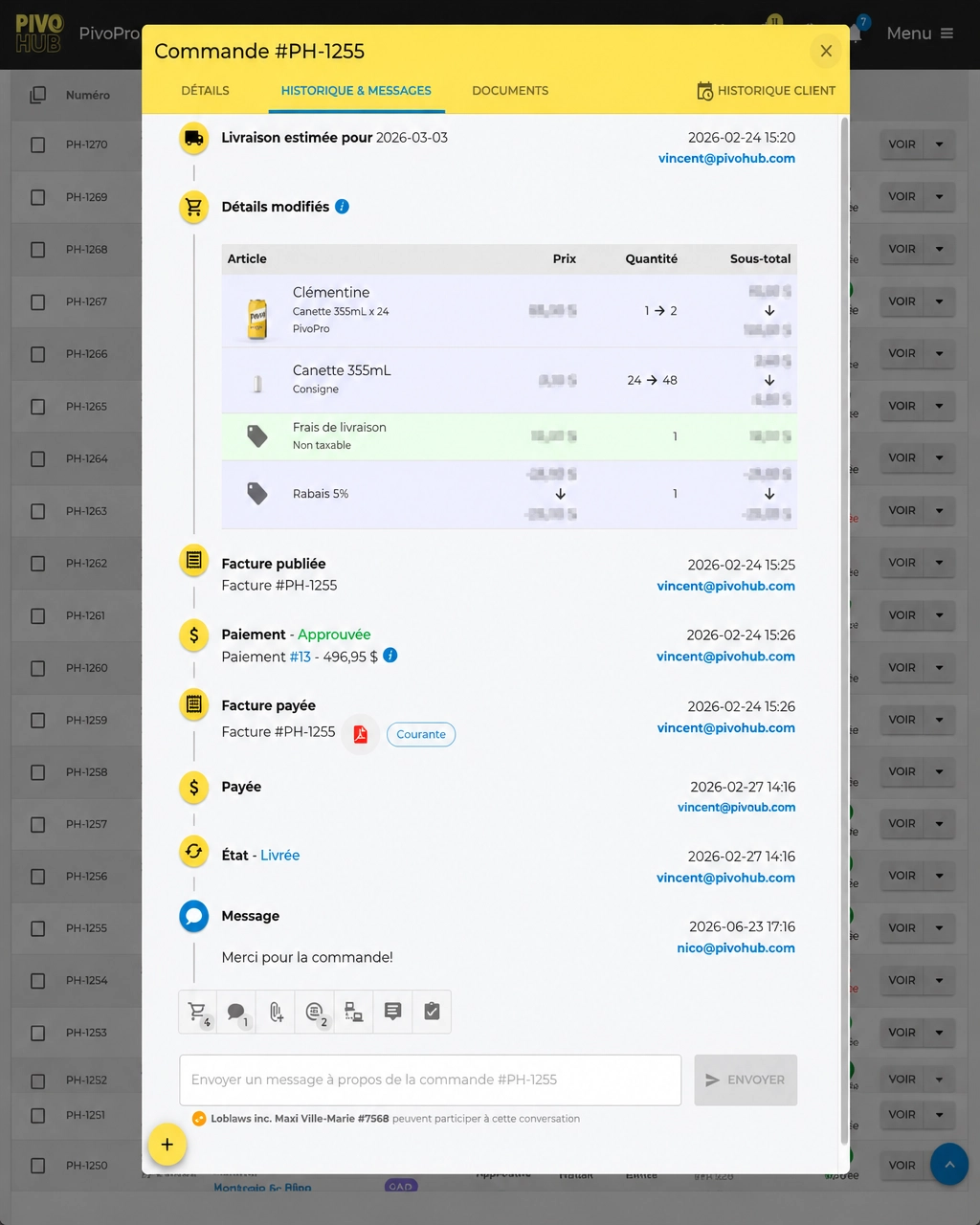
This does not mean every person sees every detail. Access and responsibilities can be structured around each role. It means that authorized participants are working from the same current information rather than recreating it independently.
PivoHub also connects with existing accounting, ERP, EDI and POS systems, so businesses do not have to discard every tool they already use. The difference is that these integrations support a broader connected workflow instead of simply linking an online store to a back office.
The biggest efficiency gains do not come from making one person type faster. They come from removing repeated work across the network.
In a siloed model, the same information may be entered several times:
Every repetition creates a chance for an error, delay or outdated version of the truth.
In a connected ecosystem, participants can share the same product information, inventory availability, order status and fulfillment updates. Brokers and agents can coordinate multiple brands without maintaining separate manual catalogs. Distributors can consolidate orders and plan deliveries using shared data. Buyers can see their order history and communicate within the transaction.
This is the practical meaning of collaboration: less forwarding, less copying and less reconciliation.
PivoHub customer outcomes cited by the company include:
These are reported customer outcomes, not universal guarantees. But they illustrate where the value comes from: connecting the work between organizations, not simply digitizing one step.
| Business need | Siloed B2B commerce platform | Connected ecosystem with PivoHub |
|---|---|---|
| Market visibility | Helps an existing customer place an order through one seller’s channel | Makes brands discoverable through a B2B marketplace used by thousands of buyers |
| Catalogs and availability | Catalog and inventory may be maintained separately from other participants | Shared product, pricing and inventory information supports every connected transaction |
| Sales process | Online orders are managed by one company while reps, brokers and distributors use separate workflows | Producers, Field rep teams, brokers, distributors and buyers can work from the same transaction |
| Order changes | Updates move through email, calls or manual imports | Order history, messages and status updates stay connected to the transaction |
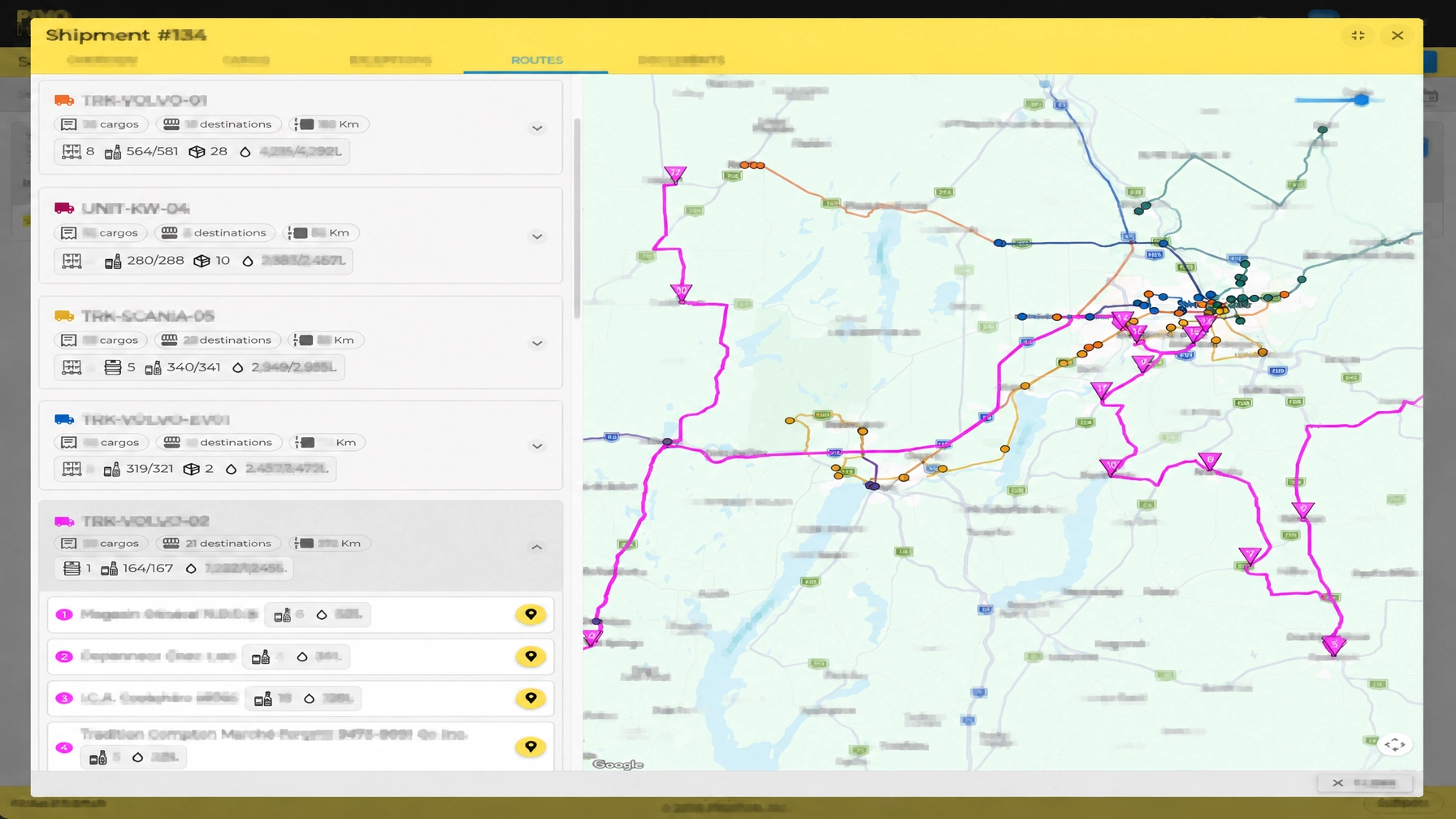
| Logistics | Route planning may require separate files and manual re-entry | Orders, inventory, delivery routes and proof of delivery can be coordinated in one workflow |
| Multi-warehouse operations | Stock visibility may be limited by location or delayed synchronization | Multi-warehouse inventory can support real-time operational decisions |
| Broker and agent coordination | Each brand or agency may maintain separate reports and catalogs | Broker and agent management supports multi-brand coordination and commission tracking |
| Analytics | Primarily reports on internal sales activity | Combines sales performance, buyer analytics, purchasing trends and prospect information |
| Back office | Integrations move selected data between systems | Accounting, ERP, EDI and POS integrations support a connected operating model |
| Commercial model | Often tied to transaction volume, add-ons or multiple point solutions | Buyers are free; sellers choose flexible modules with no transaction fees or percentage-based charges |
PivoHub is modular, so a business can start with the capabilities it needs and expand as its network grows.
| Module | Description | Who it serves |
|---|---|---|
| Admin and order management | Centralize catalogs, customers, orders, inventory and operational reporting. | Producers, distributors and growing supplier teams |
| Field rep, CRM and order taking tools | Field rep workflows, CRM activity and digital order taking in one connected process. | Field rep teams, sales managers, brokers and agents |
| Logistics | Coordinate DSD operations, delivery routes, fulfillment and multi-warehouse inventory. | Distributors, transporters and businesses managing delivery operations |
| B2B e-commerce | Launch a branded storefront and list products on the marketplace for self-service ordering and buyer discovery. | Producers, distributors and brands seeking market reach |
| Analytics and trends | Monitor sales performance, buyer activity, purchasing patterns and opportunities. | Sales leaders, commercial teams and account managers |
| Integrations | Connect accounting, ERP, EDI and POS tools to the wider PivoHub workflow. | Businesses working with an existing back-office technology stack |
When evaluating a B2B commerce platform, use this checklist:
If most answers are “no,” you may be looking at a commerce tool with integrations, not a connected business ecosystem.
PivoHub’s seller pricing is flexible and modular. A business can select an admin module, add the Field rep, CRM and order taking tools module per user, and include logistics or e-commerce capabilities as needed.
There are no transaction fees and no percentage-based charges. The monthly cost is designed to be a fraction of the calculated savings from reduced administration, fewer manual entries, faster order management and more efficient logistics.
The strongest business case is not simply “we need an online store.” It is:
The future of B2B commerce will not be defined by who has the longest integration list. It will be defined by who can create a more useful network for every participant.
A siloed platform can help one company accept orders. A connected ecosystem can help an entire commercial chain unify information, automate repetitive work, simplify collaboration and reach more buyers.
That is the role PivoHub is built to play: connecting the people and processes behind every transaction so one update can move from the sales floor to fulfillment and back office without manual re-entry.
To see how the model works for your business, explore PivoHub’s seller capabilities, buyer marketplace, logistics tools, integrations and customer case studies.


