
menu
Reconnect?
When you're shopping for new B2B sales management software, it’s easy to get distracted by the shiny stuff. You look at the slick dashboard, the mobile app, and the promise of "three-click ordering." But here is the hard truth: if the engine under the hood is built on outdated technology, that shiny interface is just a fresh coat of paint on a crumbling foundation.
The real differentiator in modern commerce isn't just what the software does—it’s how well it connects. We call this interoperability, and it is the single most important factor in whether your digital transformation succeeds or creates a new set of headaches.
Many businesses in the food and beverage industry are currently trapped by "Legacy Technology." These are old ERP systems, proprietary databases, or outdated APIs that were never designed to talk to other software.
When your systems can't communicate, you end up with "The Silo Effect":
This isn't just annoying; it’s expensive. It forces your infrastructure to be heavier than it needs to be, requiring more staff to manage the "pipes" instead of growing the business.
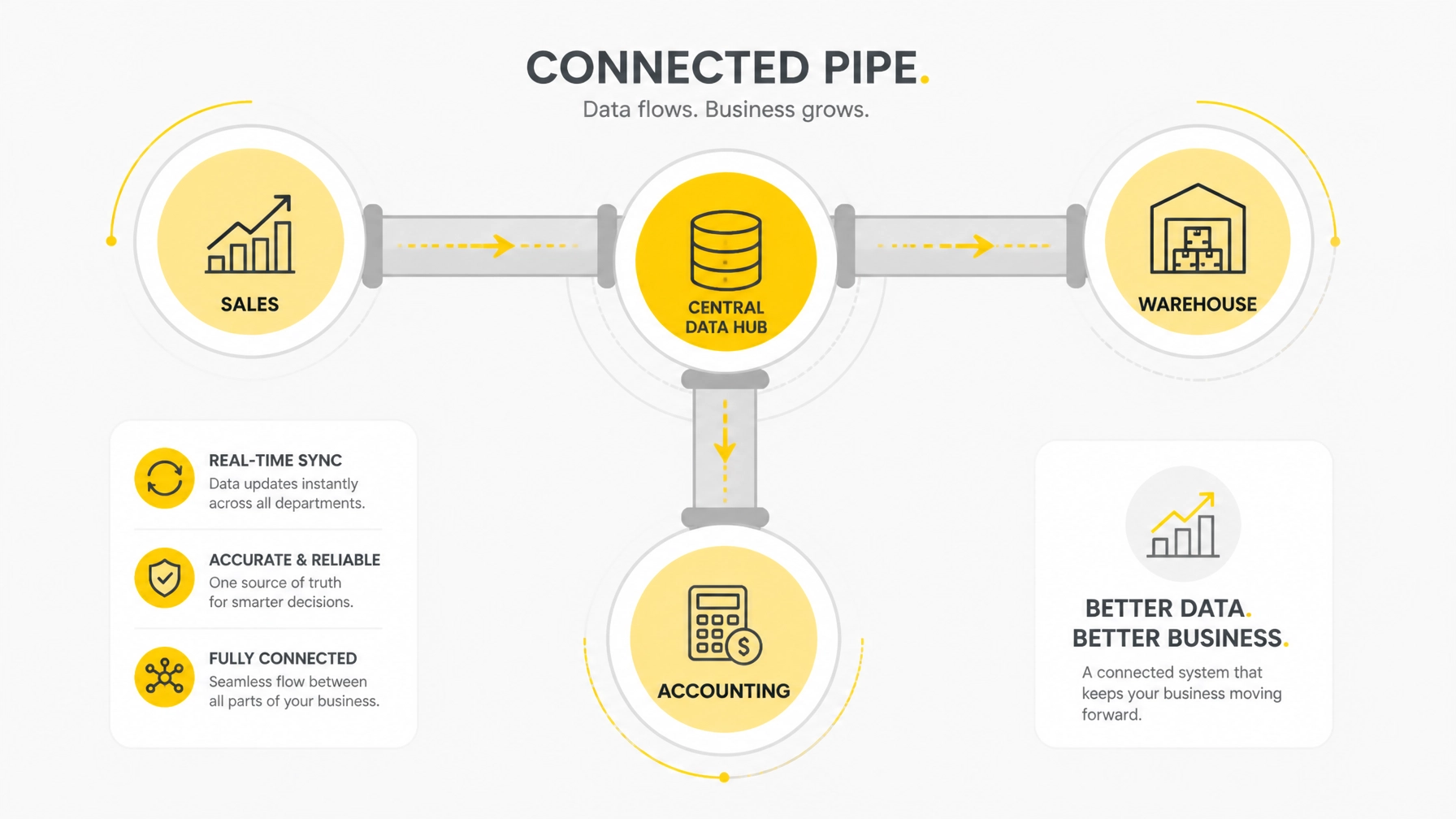
Think of your business technology as a network of pipes. In a legacy setup, the pipes are different sizes and made of different materials; nothing fits together without expensive, custom-made adapters.
True interoperability means the pipes are universal. But it’s not just about connecting your own internal tools—it’s about connecting with your partners.
If you are a producer, your system needs to speak the same language as your distributors, brokers, and retailers. When PivoHub acts as your wholesale order management hub, it creates a "commercial layer" where data flows seamlessly between every stakeholder.
At PivoHub, we didn't just build another app; we built an open, modern architecture designed for the 2026 supply chain. Our platform serves as the bridge between your sales operations and your back-office systems.
One of the biggest friction points is accounting. Most software "integrations" are just basic CSV exports. PivoHub offers native, automatic syncing with your accounting system. When a sale happens on the floor, your accounting is updated instantly. No manual entry. No errors.
If you're managing stock across multiple locations, you know the pain of "ghost inventory." PivoHub’s technology ensures that multi-warehouse inventory management is handled in real-time. Whether an order comes through the B2B Marketplace or a sales rep in the field, every location's stock levels are adjusted immediately.
The magic of a truly interoperable system is the "Network Effect." Imagine this scenario:

This isn't a futuristic dream; it’s what happens when you move away from silos and into a connected ecosystem. One single transaction updates everyone simultaneously, from the sales floor to the back office, with zero manual data entry.
Choosing software based on features alone is a short-term strategy. To thrive in a competitive B2B landscape, you need to look at the technology architecture. You need a system that doesn't just work for you, but works with your partners.
Don't let legacy technology hold your growth hostage. Embrace a tech stack that values interoperability as much as you value your customers.
Ready to see how PivoHub can unify your operations? Explore our solutions for sellers today.


